
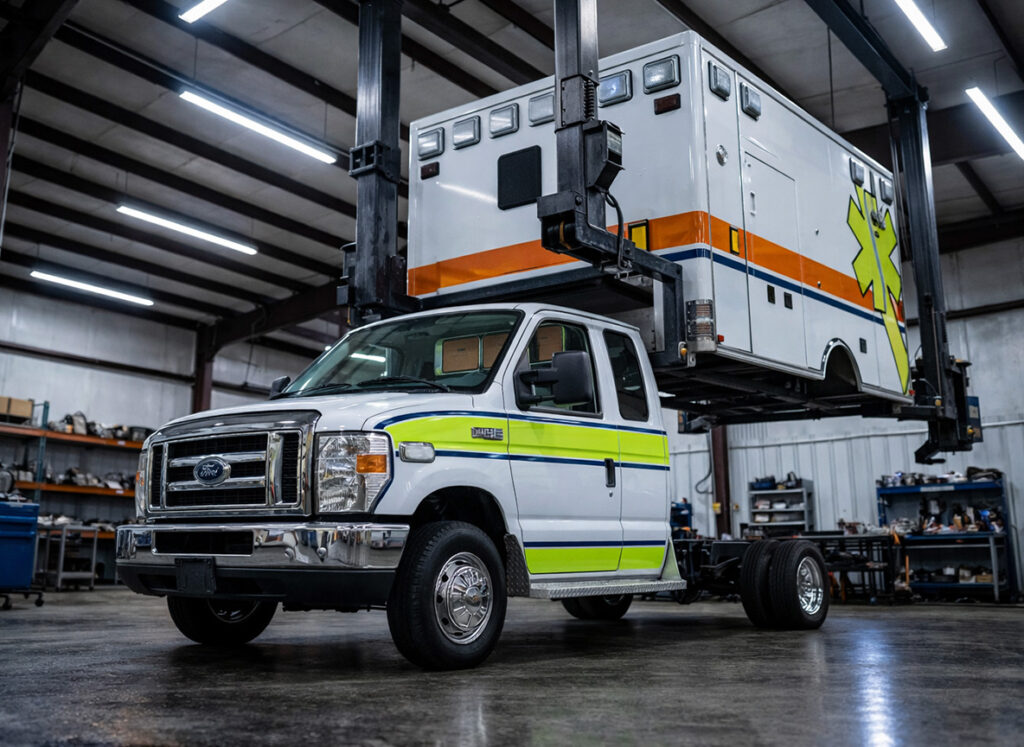
Type 3 Ambulance Remount TRES: Revitalizing Your Fleet
A Type 3 ambulance remount using a TRES (Texas Remount & Equipment Sales) approach is the most cost-effective strategy for extending the service life of your emergency vehicles without sacrificing reliability. Instead of scrapping a structurally sound module because the chassis is worn out, you transfer the patient compartment to a new cutaway van chassis while simultaneously overhauling the critical electrical backbone. This process typically saves departments 30% to 50% compared to purchasing a brand-new vehicle.
The Economics of Remounting a Type 3 Ambulance
Fleet managers face a constant battle between aging apparatus and shrinking municipal budgets. The Type 3 configuration—mounting a custom module onto a cutaway van chassis like the Ford E-Series or Chevy Express—is the workhorse of many urban and suburban EMS agencies.
The reality is simple: the chassis fails long before the module does. Engines wear out, transmissions slip, and suspensions sag after 200,000 hard miles. However, the aluminum box on the back often has decades of life left.
Here is why the math works in your favor:
- Capital Preservation: You avoid the steep depreciation hit of a completely new build.
- Reduced Lead Times: Remounts generally take significantly less time to deliver than new production orders, keeping your trucks in service.
- Continuity: Crews keep the layout they know. There is no learning curve for cabinet placement or equipment storage.
Understanding the TRES Upgrade
The “TRES” component is what separates a basic chassis swap from a true fleet upgrade. The weakest link in an older ambulance module isn’t the aluminum; it’s the wiring.
Over ten or fifteen years, electrical systems degrade. Connections corrode, insulation becomes brittle, and old relay-logic boards become prone to failure. A TRES-focused remount doesn’t just patch these issues; it replaces the nervous system of the ambulance.
When you specify a TRES upgrade during a Type 3 ambulance remount, you are looking for:
- Multiplex System Integration: Replacing bulky, spaghetti-wire harnesses with modern, solid-state multiplexing. This allows for better diagnostics and fewer physical connection points.
- load Management: Modern systems automatically shed non-essential electrical loads when the ambulance is idling, preventing dead batteries on scene.
- LED Conversion: Switching old halogen scene and warning lights to high-efficiency LEDs reduces the amperage draw on the new chassis alternator.
The Technical Process: From Teardown to Turnkey
You can’t just bolt an old box onto a new frame and call it a day. The engineering required to marry an older module to a modern chassis involves precise fabrication.
Phase 1: Inspection and Demounting
Technicians disconnect the electrical umbilicals, HVAC lines, and mounting hardware. The module is lifted, and the old chassis is sent to auction or the scrap yard. At this stage, the module’s sub-frame is inspected for stress cracks or corrosion—common issues in regions that use road salt.
Phase 2: Module Refurbishment
While the module is off the truck, it’s the perfect time for updates. This is where the TRES protocols kick in.
- Interior tear-out: Old flooring is removed to check the sub-floor.
- Cabinet repair: Latches and gas struts are replaced.
- Upholstery: Attendant seats and bench cushions are recovered with anti-microbial vinyl.
Phase 3: Chassis Prep and Remounting
New Type 3 chassis options, such as the latest Ford E-450, often have different frame rail dimensions or fuel tank placements compared to models from a decade ago. Fabricators modify the mounting pucks and frame extensions to ensure a secure fit that meets FMVSS standards.
Once mounted, the new electrical system is tied into the chassis. This integration is critical. The module needs to talk to the cab. When the driver puts the truck in reverse, the module’s rear camera and backup alarm must engage instantly.
Compliance and Safety Standards
A major concern for Fire Chiefs and EMS Directors is liability. Does a remounted ambulance meet current safety standards?
Reputable remount centers adhere to strict guidelines. When you perform a Type 3 ambulance remount, the finished vehicle should comply with the standards applicable to the new chassis year.
Key compliance checks include:
- KKK-A-1822F: The federal specification for ambulances.
- NFPA 1917: The standard for automotive ambulances.
- CAAS GVS: The Ground Vehicle Standard.
The remount process must ensure that weight distribution remains within the Gross Vehicle Weight Rating (GVWR) of the new chassis. Overloading a Type 3 cutaway is a safety risk that professional remounters mitigate through precise weight calculations before the box is ever bolted down.
Why the Chassis Choice Matters
In the Type 3 market, the cutaway van chassis offers a distinct advantage: the pass-through cab. This allows for easier communication between the driver and the medics in the back.
When selecting your new chassis for the remount, consider the payload.
- Ford E-450: The industry standard. High payload capacity and parts availability make it a safe bet for heavy modules.
- Chevy Express G4500: Offers a slightly different ride quality and engine package.
Ensure your remounter validates the wheelbase. If your module is exceptionally long, the chassis frame rails may need certified extensions to prevent rear-axle overloading.
Making the Decision
If your fleet operates Type 3 ambulances, you are sitting on a renewable asset. The module is an investment that shouldn’t be thrown away just because the odometer rolled over.
By utilizing a TRES-focused remount strategy, you aren’t just recycling; you are upgrading. You get the reliability of a factory-fresh engine and transmission, the safety of modern electrical architecture, and the fiscal responsibility that keeps your department’s budget in the black.