
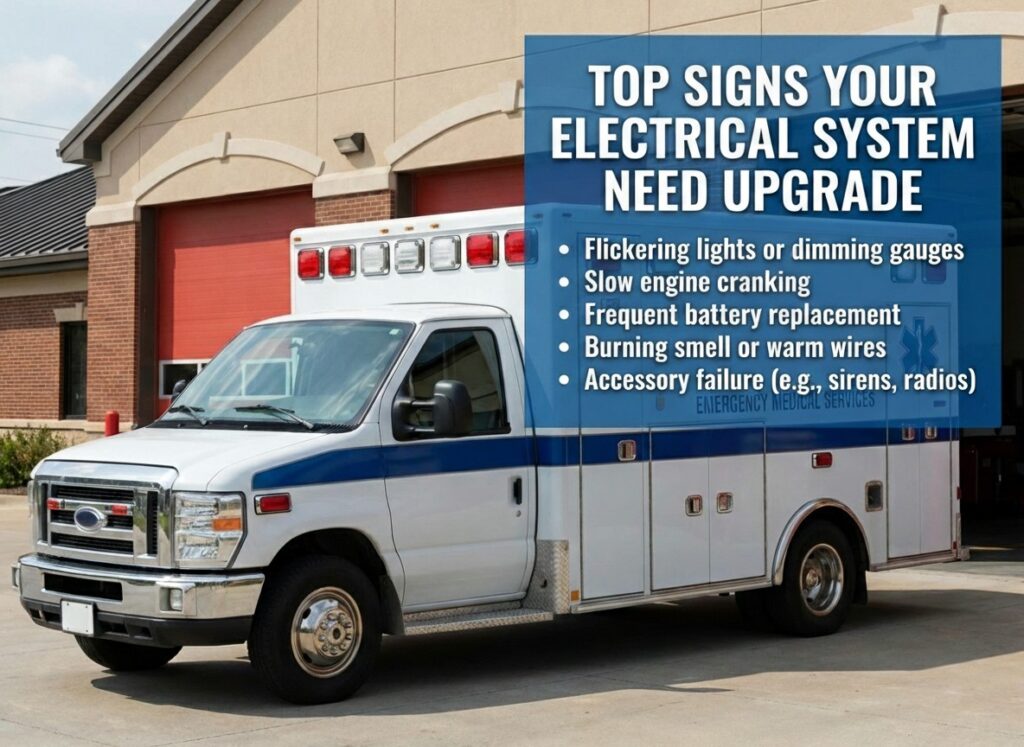
Top 5 Signs Your Ambulance Electrical System Needs an Upgrade
The electrical system is the central nervous system of your emergency vehicle. When it fails, the rig doesn’t just sit in the bay; it puts patient lives and crew safety at risk.
If you’re managing a fleet of aging Type I or Type III ambulances, you already know that electrical demons are the most frustrating cause of downtime. But how do you distinguish between a simple blown fuse and a systemic failure that requires a total overhaul?
An outdated or failing EMS electrical system usually broadcasts its retirement plans long before the final breakdown. You just need to know what to look for. Here are the top five indicators that your ambulance’s wiring, power distribution, and load management systems are due for a serious upgrade.
1. Persistent Parasitic Draw and “Dead on Arrival” Batteries
There is nothing worse than a crew rushing to the bay for a hot call only to hear the dreaded click-click-click of a dead chassis battery.
If your crews are constantly jump-starting rigs despite them being plugged into shoreline power, you have a problem. While batteries do degrade over time, chronic failure usually points to parasitic draw. This happens when aftermarket equipment—radios, MDTs, charging bases for power cots—bypasses the master disconnect switch.
In older systems, adding new tech to an old harness creates “ghost loads” that the original shoreline charger can’t keep up with.
Look for these red flags:
- Batteries require replacement every 6-12 months instead of every 2-3 years.
- The shoreline auto-eject is hot to the touch (indicating high resistance).
- Voltage meters drop significantly immediately after engine shutdown.
2. Voltage Drops When Under Load (The “Dimming” Effect)
Your ambulance should be able to handle “Code 3” operations without breaking a sweat. However, as wiring ages, resistance increases. Corrosion builds up on ground points and terminals, making it harder for electricity to travel.
Test this by loading the system. Turn on the primary lightbar, scene lights, HVAC (front and rear), and the siren. Watch the interior dome lights and the voltmeter.
If you see these symptoms, the system is struggling:
- Interior module lights dim when the siren wails or the AC compressor kicks in.
- The inverter alarm sounds when using high-draw medical equipment.
- The voltmeter fluctuates wildly rather than holding a steady 13.8V – 14.2V.
This indicates your alternator or power distribution logic cannot manage the current amp draw. In modern remounts, we solve this with multiplex systems that utilize load shedding—automatically turning off non-essential items (like glove box lights) to prioritize the lightbar and life-support equipment.
3. Physical Heat Damage and Melted Insulation
You shouldn’t need a thermal imaging camera to tell you if your wiring is unsafe, but it certainly helps.
During your next preventive maintenance (PM) check, open the electrical locker and look closely at the wiring harness. In older rigs, specifically those that have had multiple radios or GPS units installed and removed over the years, the wiring often resembles a “bird’s nest.”
Danger signs include:
- Discoloration: Wires that look brown or black near the connectors.
- Brittleness: Insulation that cracks when you bend the wire.
- Smell: The distinct, acrid scent of ozone or burning plastic.
If you find melted fuse blocks or relays that are too hot to touch, you are looking at a fire hazard. This isn’t a repair job; it’s a mandate for a complete harness replacement or a remount with a new electrical architecture.
4. The “Gremlins” (Intermittent Component Failure)
“It works fine in the shop, but fails on the road.”
Fleet managers hate this phrase. Intermittent failures are the hallmark of grounding issues and corroded connections typical in vehicles over 7 years old. Because ambulances vibrate constantly and endure extreme temperature swings, mechanical crimps loosen and ground straps corrode.
Common “Gremlin” behaviors:
- The siren cuts out only when it rains.
- Emergency lights flicker when the ambulance hits a pothole.
- Module climate control resets randomly.
Chasing these ghosts in an analog, point-to-point wired system is a money pit. Upgrading to a solid-state, printed circuit board (PCB) system eliminates hundreds of mechanical connections, removing the physical points of failure that cause these headaches.
5. Incompatibility with Modern Medical Devices
The ambulance of 2010 was not designed to power the medical devices of 2024.
Modern fleets are loading rigs with power-loading stretchers (like the Stryker Power-LOAD), ECMO machines, advanced cardiac monitors, and telemedicine routers. These devices require clean, reliable power.
Older inverters—specifically modified sine wave inverters—can wreak havoc on sensitive electronics. Furthermore, the amperage draw of these new tools often exceeds what the original builder calculated for the vehicle.
It’s time to upgrade if:
- You are tripping breakers when charging the cot and running the suction unit simultaneously.
- New medical equipment displays “power error” codes when plugged into onboard outlets.
- You lack USB-C or rapid-charging ports for crew tablets and phones.
The Verdict: Repair or Remount?
If your ambulance chassis (engine and transmission) still has life left in it, but the electrical system is a nightmare, you don’t necessarily need to buy a brand-new truck.
This is the prime use case for an ambulance remount.
By moving your existing module to a new chassis, reputable remounters will strip the old electrical system entirely. We replace outdated rocker switches and spaghetti wiring with modern, NFPA 1917-compliant multiplex systems. You get the reliability of a new truck’s electrical backbone for roughly 60% of the cost of buying new.
Don’t wait for a total blackout on a dark highway. If you spot these signs, start planning your electrical upgrade strategy today.