
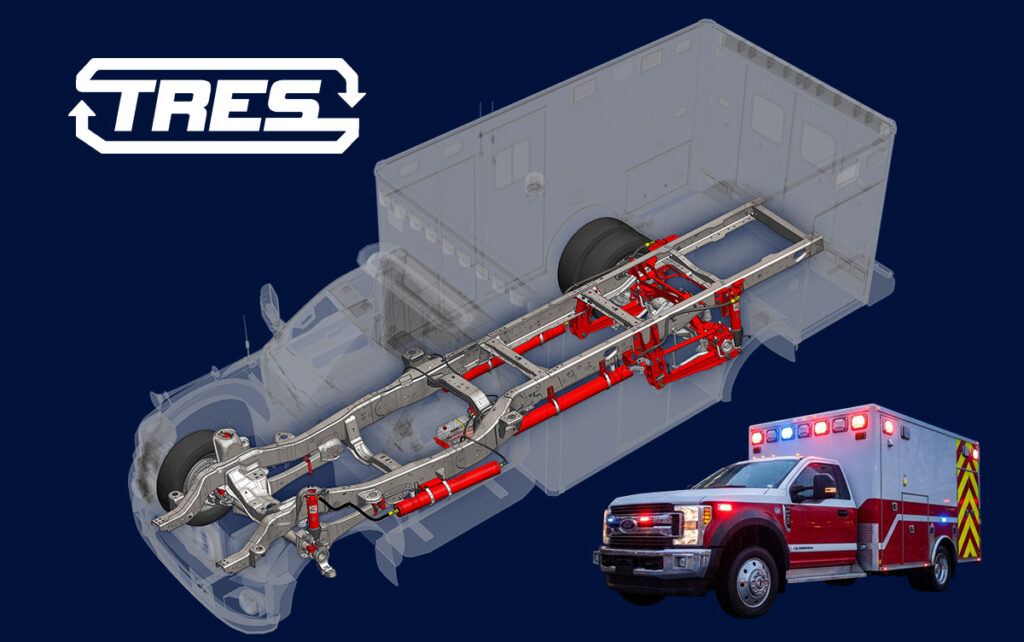
Integrating LiquidSpring® Suspension on TRES EMS Remounts
Integrating LiquidSpring® Suspension during a TRES (Texas Remount & Equipment Sales ) EMS remount is the single most effective mechanical upgrade a fleet manager can authorize to improve clinical outcomes and reduce vehicle maintenance costs.
By replacing standard factory leaf springs with a Compressible Liquid Adaptive Suspension System (CLASS®) during the chassis exchange process, agencies transform a rough-riding medium-duty truck into a stable, hospital-grade platform. This integration mitigates road vibration that compromises patient care while simultaneously protecting sensitive onboard medical equipment from shock damage.
Why Stock Chassis Suspension Fails EMS Operations
Most Type I and Type III ambulances are built on commercial chassis platforms like the Ford F-series, Chevy Silverado 4500/5500, or Ram chassis cabs. While these trucks are engineering marvels for hauling heavy static loads—like gravel or lumber—they aren’t designed for the dynamic, fragile cargo of an EMS operation.
Stock steel leaf springs present several operational challenges:
- High Vibration Frequency: Standard springs transmit road noise and harshness directly into the patient module.
- Body Roll: High centers of gravity cause significant sway during cornering, unnerving the driver and the medic in the back.
- Ride Height Issues: Standard chassis cannot lower their deck height, making loading bariatric patients difficult and increasing back injury risks for crews.
When you opt for a remount, you have a unique opportunity to address these OEM limitations without the price tag of a brand-new custom vehicle.
The LiquidSpring® Advantage in Remounting
The ideal time to install a LiquidSpring® system is when the ambulance module has been removed from the old chassis. TRES technicians have unobstructed access to the new chassis frame rails, allowing for a seamless integration of the five-link suspension system before the module is remounted.
This timing reduces labor hours compared to a retrofit and ensures the system is calibrated specifically for the weight distribution of your refurbished module.
How CLASS® Works
Unlike air bags that can bounce or steel springs that are too stiff, Liquid Spring uses a compressible fluid. A microprocessor monitors driving conditions 1,000 times per second.
It automatically adjusts the spring rate and damping at each wheel instantaneously. If the driver jerks the wheel to avoid a pothole, the system stiffens the outside suspension to prevent roll. If the road is straight but bumpy, it softens the ride to absorb impact.
Clinical Benefits: Improving Patient Outcomes
The primary mission of any ambulance is patient care. A rough ride isn’t just a comfort issue; it’s a clinical one.
Integrating this suspension technology supports paramedics in critical moments:
- CPR Efficacy: Studies suggest that smoother rides allow for more consistent chest compressions during transport.
- IV Insertion: Reducing vertical acceleration (bouncing) makes starting lines significantly easier and reduces the risk of needle sticks.
- Trauma Transport: For patients with spinal injuries or severe pain, minimizing road shock is a vital component of pain management protocols.
Protecting Your Investment: Equipment and Module Life
Beyond the patient, the vibration dampening provided by Liquid Spring protects the expensive assets inside the rig.
Modern ambulances carry defibrillators, mechanical CPR devices, ventilators, and complex telemetry systems. Constant vibration from a stiff chassis can loosen internal connections and degrade calibration over time. By smoothing out the ride, you extend the service life of these devices.
Furthermore, the ambulance module itself benefits. A remounted box is an investment. Reducing the twisting and jarring forces transferred from the frame rails to the module structure helps prevent:
- Cracking in aluminum welds.
- Loosening of cabinet door hinges.
- Electrical shorts caused by vibrating wire harnesses.
The “Kneeling” Feature: A Safety Must-Have
One of the most requested features of the LiquidSpring® integration is the ability to “kneel” or dump the rear suspension.
When the ambulance arrives at the scene or the hospital bay, the driver can lower the rear deck height by several inches. This reduces the ramp angle for the cot.
For EMS crews, this small adjustment pays massive dividends:
- Reduced Lifting Strain: Lower loading heights mean less physical exertion when loading heavy patients.
- Safer Egress: It’s easier for elderly or ambulatory patients to step out of the back.
Technical Compatibility and TRES Integration
When TRES handles your remount, the integration process is engineered to match your specific chassis selection.
Liquid Spring systems are compatible with all major ambulance chassis platforms:
- Ford: F-350 through F-550 (4×2 and 4×4).
- GM: Chevy Silverado 4500HD, 5500HD, and 6500HD.
- Ram: 3500, 4500, and 5500 Chassis Cabs.
- International: CV Series.
TRES technicians ensure that the onboard compressor and fluid reservoir are mounted in locations that remain accessible for maintenance but protected from road debris.
Conclusion: The Smart Fleet Upgrade
Remounting is already a financially savvy move, saving departments roughly 30% to 40% compared to buying new. Allocating a portion of those savings to a LiquidSpring® suspension upgrade transforms the vehicle’s capability.
You aren’t just recycling a box; you’re engineering a better ambulance.
By prioritizing suspension integration during your next TRES project, you ensure your fleet is safer for your crews, gentler on your patients, and built to last longer on the road.