
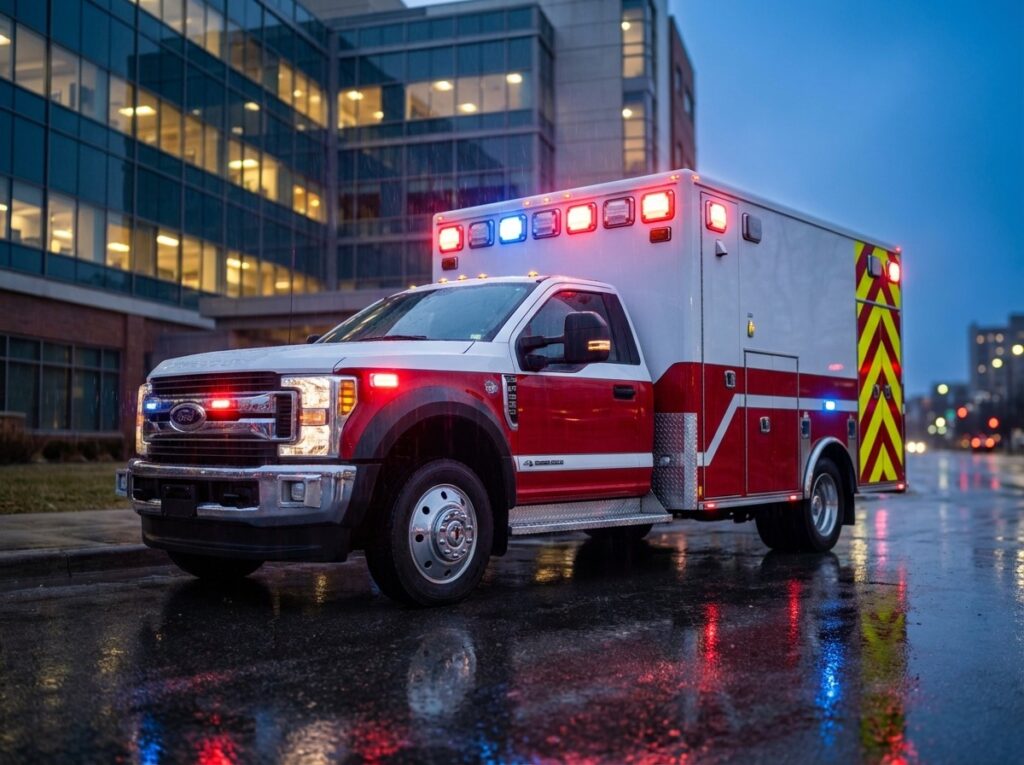
Type 1 Ambulance Remount TRES: Revitalizing Your Fleet for Less
A Type 1 Ambulance Remount by Texas Remount & Equipment Sales (TRES) is a comprehensive fleet management strategy that transfers your existing, high-quality patient module onto a brand-new chassis. Instead of discarding a perfectly good ambulance box because the engine or transmission has hit its limit, TRES refurbishes the module and mounts it to a new Ford, Ram, or Chevy truck frame. This process saves departments 25% to 40% compared to buying new and drastically reduces delivery lead times.
Why Consider a Remount Over Buying New?
Fleet managers and EMS Directors face a brutal reality right now: new ambulance prices are skyrocketing, and delivery lead times can stretch over 24 months. You can’t afford to have a gap in service coverage while waiting for a manufacturer to build a rig from scratch.
The patient module (the box) on a Type 1 ambulance is built like a tank. It’s designed to outlast two, sometimes three, chassis lifecycles. When you choose a Type 1 Ambulance Remount, you leverage that durability. You aren’t just fixing an old truck; you’re recycling a massive capital asset.
Here’s why TRES remounts make financial and operational sense:
- Significant Cost Savings: You keep the most expensive component—the fabricated aluminum module.
- Faster Turnaround: Remounts typically take 90 to 100 days, getting units back on the street faster than ordering new.
- Familiarity: Your crew already knows the layout of the box. There’s no learning curve for equipment placement.
- Custom Upgrades: It’s the perfect time to upgrade lighting, HVAC, or suspension systems without the price tag of a full custom build.
The TRES Remount Process: More Than Just a Swap
TRES doesn’t just bolt an old box onto a new truck. They perform a deep-dive refurbishment that resets the clock on your emergency vehicle. The goal is to make the unit look and function like it just rolled off the assembly line.
1. Demount and Inspection
The process starts by disconnecting the module from the tired chassis. Once removed, technicians inspect the module’s sub-frame for stress cracks, corrosion, or structural fatigue. If the foundation isn’t solid, the remount won’t last, so TRES addresses structural integrity first.
2. Chassis Preparation
Whether you prefer the Ford F-series (F-350/F-450/F-550), the Ram 4500/5500, or a Chevy, the new chassis requires modification to accept the module. This includes:
- Wheelbase adjustments.
- Installing cab-to-module pass-through bellows.
- Suspension modifications (often upgrading to Liquid Spring systems for a smoother ride).
3. Electrical and HVAC Overhaul
Old wiring is the number one cause of ambulance failure. During a TRES remount, outdated electrical systems are often ripped out and replaced. They install modern multiplex systems that offer better diagnostics and reliability.
The HVAC system usually gets a complete rework as well. Technicians replace condensers, evaporators, and hoses to ensure your crew and patients stay cool in the summer and warm in the winter.
4. Cosmetic Restoration
Once the mechanical work is done, the aesthetic transformation begins. The module is sanded, prepped, and painted to match the new cab. New graphics, chevrons, and lettering are applied to match your department’s current branding. When it rolls out of the shop, the public won’t be able to tell it’s a remount.
Upgrading Safety and Compliance
Safety standards change constantly. An ambulance built ten years ago might not meet today’s NFPA 1917 or CAAS GVS standards. A major advantage of the TRES workflow is the ability to bring older units up to current code.
During the remount, you can add:
- New LED Warning Lights: Brighter, more efficient, and less tax on the electrical system.
- Safety Flooring: Replacing old linoleum with non-slip, antimicrobial flooring.
- Restraint Systems: Upgrading to 4-point or 6-point harnesses for crew safety.
- Cot Retention Systems: Installing modern mounts for Stryker Power-LOAD or Ferno systems.
Addressing the Chassis Shortage
The EMS industry is currently battling a severe chassis shortage. Manufacturers often have rows of completed modules sitting on the ground waiting for truck frames.
By utilizing a remount strategy, you have more flexibility. If you can source a chassis locally through a municipal dealer, TRES can often work with that provided unit. This bypasses the allocation restrictions that large OEMs face, potentially cutting months off your wait time.
Is Your Fleet Ready for a Remount?
Not every ambulance is a candidate for a Type 1 Ambulance Remount. If the module has severe corrosion, accident damage, or is an obsolete design that can’t be modernized, it might be time to retire it.
However, for the vast majority of fleets, the box is still solid. If you have a Type 1 unit where the engine is tired but the back is in good shape, a remount is the smartest fiscal move you can make. You save taxpayer money, improve crew safety, and ensure your community has reliable response vehicles ready to roll.